Reflections on the sector’s evolving health and safety culture at TSA’s 2026 Health and Safety Day – Double Tree, Hilton, Wokingham
The Textile Services Association (TSA) ran a Health and Safety Summit at the Double Tree, Hilton in Wokingham on Tuesday 21st April. Over 75 member attendees representing laundries from all sectors of the industry, were presented with a range of talks looking at key health and safety issues. From fire safety and prevention and how this relates to insurance companies, to universal health issues like CPR training. The summit also examined how technological advancements are altering how risk is managed and prevented. This diverse programme offered by the TSA gave practical solutions and shared experiences designed to facilitate the progress of health and safety culture within the sector.
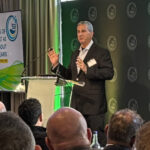
After a welcome from the TSA’s managing director, Emma Kiviniemi Wilson, Gary Youngson from Elis, who is also co-chair of the TSA’s Health & Safety Steering Group, presented on ‘Strengthening Our Safety Culture’. He said that with 90% of TSA members having shared their health and safety data amongst the association and its members, that strengthening is becoming a reality. “There are so many people with a thirst for the subject, and collaboration is absolutely essential,” he added.
The issue of fire risks facing the laundry industry and how this affects insurance premiums was next tackled head on. Mark Middleton, managing director of Belmont Laundry, shared his personal story of losing two laundries in a short period of time due to fire. “I’m happy to talk about it if it helps prevent anyone having a similar situation,” he said. Stories like Mark’s further amplified the importance of improving the health and safety culture further within the sector through personal reflection and the lessons learnt from moments of crisis.
Mark’s talk was followed by Andy Taylor from Marsh, an insurance broker, who explored how the TSA’s Code of Conduct and the improving the health and safety culture within the sector had the potential to reduce the high insurance premiums faced by commercial laundries. “The industry is clearly trying to improve risk management,” says Andy. “Our job as brokers is to try and change insurers’ perceptions.” He initially became involved with the TSA as its Fire Code of Practice was being created. He said, “My role was to help move the dial in terms of insurer engagement with the laundry industry. Things are improving, we’re putting mitigation in place. The future is going to be different to the past.”
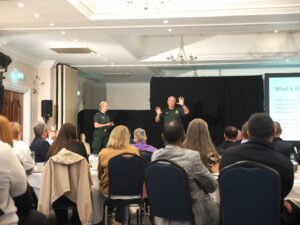
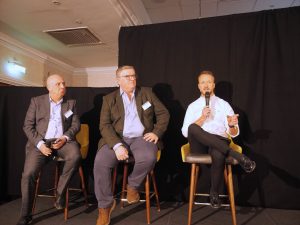
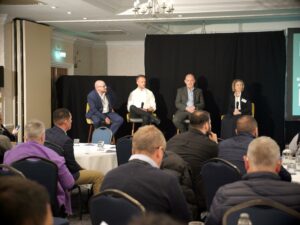
Another panel put TSA members centre stage, discussing the practical steps they had taken to improve the health and safety culture within their companies. The panel comprised of Chris Bell from Clean and Claire Wroblewski from Johnson Service Group, with Gary Youngson and Mark Middleton returning to the stage too.
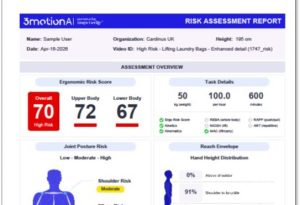
Following this the programme focussed on two presenters from health and safety specialist companies: Ryan Brittain of Cardinus Risk Management and Graeme Johnson of Pristine Condition. The former demonstrated how his company’s AI software was changing the way risk can be assessed. This focussed on how common ergonomic malpractices were putting many industries under financial burden due to personal injury, and how AI could help educate staff to avoid such injuries. “Keeping employees well and healthy will improve productivity, workflow, staff moral and reduce costs,” he said. The AI software described in Ryan’s talk has been integrated into the Cardinus app which the TSA has been assessing with a sector specific lens to ensure it offers the best options for its members. Pricing and licensing options will be revealed soon, but it’s been confirmed that TSA members will receive a discounted rate. Graeme’s talk also focussed on personal injury reduction, by examining Pristine’s health and safety techniques, from manual handling training to behavioural changes. Both presentations demonstrated how the developments and practices from health and safety specialists outside the sector can impact the health and safety culture within the laundry industry.
“I think the message from what I was listening to is culture,” says Graeme. “How can we change culture? I think it’s improving those soft skills. Having these conversations. If you’ve been working somewhere 30 years, share your knowledge with someone who has started that week.”
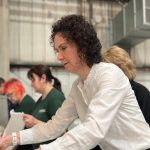
The topic of emergency first aid CPR training and cardiac health response was also discussed. It included a moving survival story shared by Mark Moran, as well as an overview of Essential CPR Skills with Kevin Dickens from the South Western Ambulance Service NHS Foundation Trust.
“The hands-on CPR demonstration was very effective,” says Andrew Glassford, the TSA’s newly appointed project director. “We had over 70 people in the room who are likely to leave feeling better equipped to deal with something that could happen in their lives tomorrow. And that’s just a massive win.”
Attendees were appreciative of the health and safety educational opportunities provided by the TSA’s summit and how these could help them going onwards.
“Life is the priority,” says Nisha Vijayakumar from Johnson Service Group, Southall. “The TSA is helping us take the next health and safety steps.”
The TSA will continue to provide more information on the topics arising from the summit through its Health and Safety steering group. The summit is an annual event and will return next spring, with the date and venue to be confirmed.
If you have any queries, please do not hesitate to get in touch with us either via email or phone:
T +44 (0) 20 3151 5600